
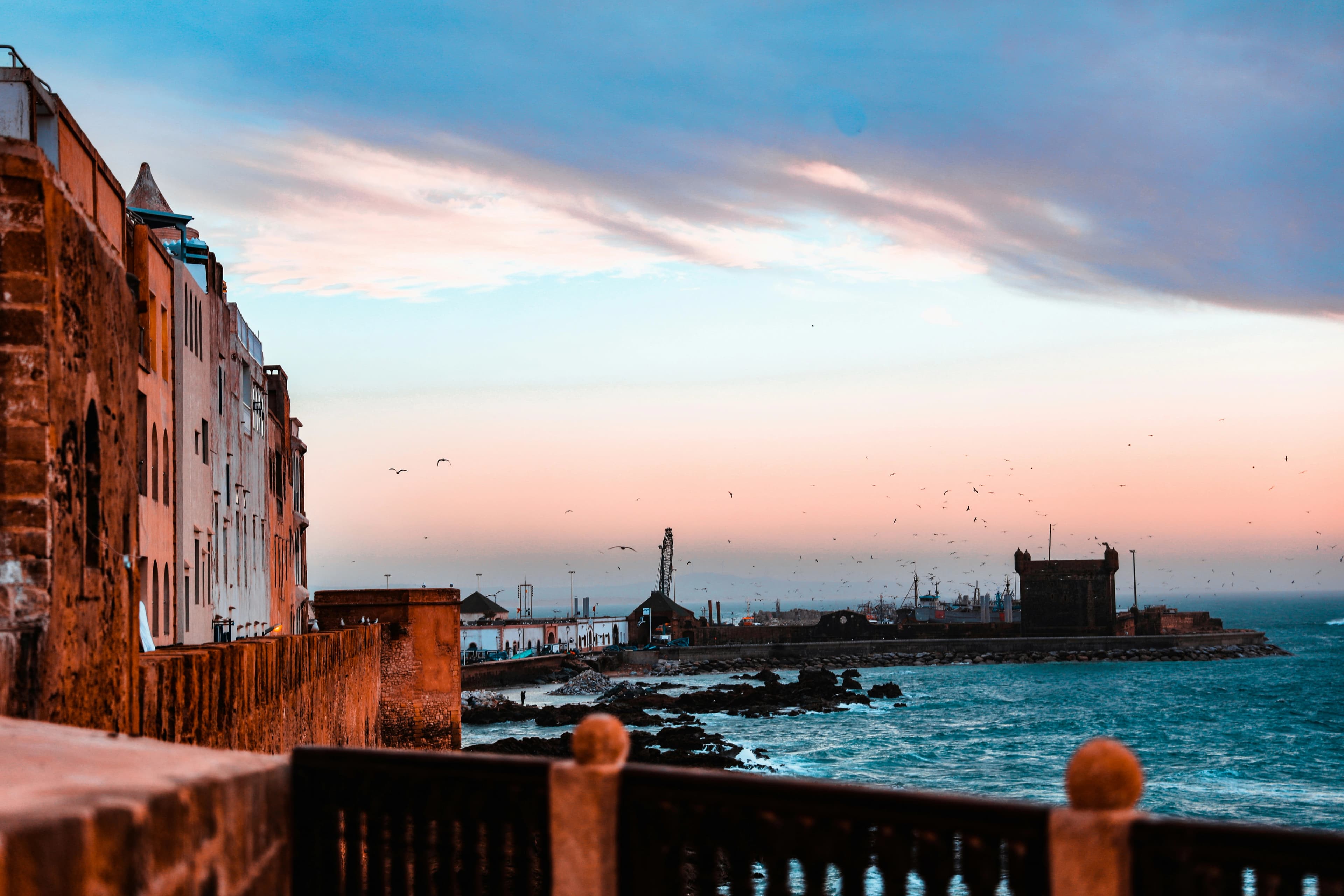
Essaouira Ramparts & Skala Essaouira – Travel Guide
Essaouira is a coastal city where history and the Atlantic Ocean meet in a calm and harmonious way. Its ramparts and Skala Essaouira are among the most recognizable monuments in Morocco, reflecting the city’s maritime character and long-standing connection to trade and exchange. Visitors often wonder about the Essaouira ramparts cannons Atlantic and the scenic views they offer.
Built in the 18th century during the reign of Sultan Sidi Mohammed Ben Abdallah, the ramparts were designed to protect the city and its port. At that time, Essaouira, then known as Mogador, was developed as an important Atlantic harbor. The fortifications played a key role in safeguarding commercial activity and ensuring the city’s stability.
The ramparts extend along the coastline and around the medina, forming a strong yet elegant defensive system. Constructed from local stone, they blend naturally with the surrounding landscape. Their straight lines, bastions, and towers reflect careful planning and solid craftsmanship. The structure was designed to resist ocean winds while maintaining a clear and organized urban layout behind the walls.
The Skala de la Kasbah is the most iconic section of the ramparts. Overlooking the ocean, it features a line of historic cannons facing the Atlantic. From this elevated walkway, visitors can enjoy wide views of the sea, the port, and the medina. The Skala du Port and Skala de la Ville ramparts also served as observation points, allowing guardians of the city to monitor maritime activity. Many travelers also ask about Essaouira Game of Thrones location, as several scenes were filmed nearby
Essaouira is known for being a well-planned city. Its design combines Moroccan architectural traditions with technical influences common in coastal fortifications of the period. This balanced approach gave the city a functional layout that remains effective and pleasant today. The ramparts clearly separate the medina from the sea while maintaining easy access between the port and the city.
Today, the ramparts Essaouira and Skala are no longer used for defense, but they remain central to the life of the city. Residents and visitors walk along the walls, enjoy the ocean views, and experience the peaceful atmosphere created by the constant presence of the sea. The sound of waves and seabirds adds to the unique character of the site. Visitors during Essaouira at Christmas or Essaouira in December find the serene coastal scenery especially enchanting.
The medina of Essaouira, including its ramparts, is listed as a UNESCO World Heritage Site. This recognition highlights the historical and architectural value of the city as an example of an 18th-century fortified coastal town that has been well preserved. Don’t miss seeing the goats in trees—a quirky and famous local sight unique to Essaouira.
The ramparts Essaouira are not only historical structures; they are part of the city’s daily rhythm. Fishermen work near the port below, and locals regularly gather along the walls to relax and observe the ocean. This continuity between past and present gives the monuments a strong sense of authenticity. Tourists looking for Essaouira beach horse riding or to book a surf lesson for beginners in Essaouira will also find the city a perfect base. Visitors exploring the ramparts and Skala can also find local shops selling authentic argan oil products, one of Essaouira’s famous exports.
Essaouira Ramparts and Skala stand today as symbols of balance between protection and openness. They represent a city shaped by the sea, where architecture, history, and environment come together in quiet and lasting harmony. Ready to explore Essaouira? Book your guided tour with Nomad Morocco Travel today!