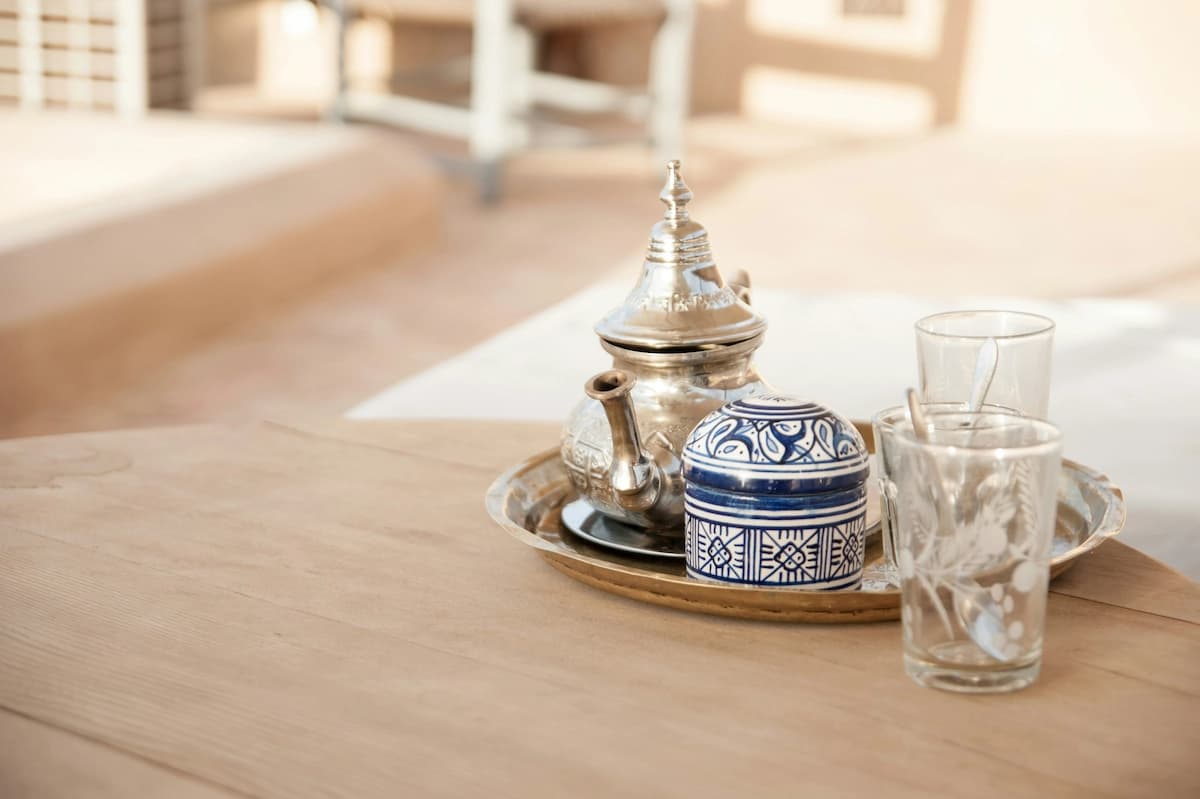
Morocco has a long and well-established tradition of enjoying both tea and coffee, each woven into daily life and social interactions across the country. Moroccan mint tea, made with green tea, fresh mint, and sugar, is especially widespread and widely recognized for its role in hospitality. Preparing and serving this tea is considered a valued ritual in many homes and cafés throughout Morocco.
Tea in Morocco isn’t just a drink — it’s a symbol of welcome and connection. Visitors and locals alike often enjoy tea in social settings or with meals, and the process of brewing and serving reflects care and attentiveness. Green tea with fresh mint remains the most emblematic style, enjoyed at all times of the day.
Coffee also plays an important part in Moroccan café culture. In cities and towns, cafés offer a range of coffee styles — from traditional black coffee to lighter espresso-style drinks — and serve as common gathering places where people meet to talk, relax, or enjoy a break. The presence of coffeehouses contributes to everyday social life, providing spaces for conversation and community.
Reflecting this shared cultural interest, the first Marrakech Coffee & Tea Festival was held in Marrakech from December 6 to 8, 2025. This event brought together producers, baristas, artisans, and enthusiasts from Morocco and abroad to celebrate the traditions and evolving practices around coffee and tea. The festival featured exhibitions, workshops, conferences, tastings, and competitions, including the Moroccan Coffee & Tea Masters championship. It served as a platform for exchange, learning, and appreciation of both beverages within a broader cultural and professional context.
In Morocco, tea and coffee are more than drinks — they are part of daily rhythms, social connections, and cultural identity, enjoyed in homes, cafés, and increasingly on larger stages like national festivals.